
 Social Psychologist & Personal Advisor
Excerpts from
"Changing Your Stripes"

Complimentary Consultation
When you buy Changing Your Stripes
Understanding How Words Work:
You Can't Say What You Mean!.
by Matt Moody, Ph.D..
What is the meaning of the following phrase: "I had a car stolen"?
If the phrase "I had a car stolen" is spoken verbally, the meaning of the phrase is clarified through accompanying vocal inflections and body gestures. As the Speaker or Writer changes the emphasis on particular words, a change in meaning is indicated. By putting an accent upon the bolded words in the following phrases, consider these three possible meanings:
I had a car stolen — a car was stolen from me, in the past.
I had a car stolen — "a" single car was stolen from me, whether in the past or present.
I had a car stolen — I enlisted the help of another person to pilfer a pontiac for me,
a car that was not mine.
Even with multiple meanings of our five-word phrase, the words do cause a listener/reader to narrow likely interpretations, especially as three factors are accounted for:
1) TONE of the writer or speaker of words.
2) INTENT of the writer or speaker of words.
3) CONTEXT within which words are expressed.
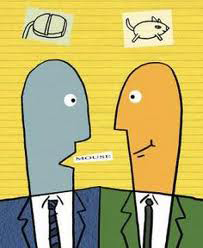
How Words Work. The phrase, I had a car stolen., is a good illustration of how words work: Words provide definitional boundaries that narrow interpretations to a few feasible options. Such interpretive narrowing is further refined as various voice inflections, body gestures, and emotions are added to the speaking of the words. Rarely do word-symbols mean only ONE thing.
Meaning is not inherently in words per se; rather meaning resides in human beings. Mortals are Meaning-Makers, and as such, they "bring" meaning to word-symbols. The act of "bringing" is called translation or interpretation.
In the end, how will we ever know what a Speaker or Writer means? EASY! If the Speaker/Author is still alive, we can ask that person for clarification: "Exactly what did you mean by the words: I had a car stolen?"

Contrary to common trends of Political Correctness — where the PC Police erroneously imagine that they are the ultimate arbiters of a meaning — it's really the Author's intent of heart that determines the true "meaning" of particular communications; the same "meaning" that God knows and holds each individual accountable for (see 1 Samuel 16: 7; 1 Chron 28: 9).
If some people choose to bring offense to words spoken or written by an Author, who had no malicious intent, then the problem resides with the false interpretation contrived in their minds of the PC Police — when there is no problem in reality.
Those who speak and write words are the final authors of their Intent. If an Author has a proven track record for being honest and reliable, we can believe their clarifications of Intent as they elaborate. On the other hand, when a person has a proven-track record for "spinning" or "playing politics" or flat-out "lying," then we are wise to be skeptical of their clarifications, because of a track record for not being consistently honest.
You Can't Say What You Mean. The philosopher Friedrich Nietzsche said this of language:
"Reality is captured in the categorical nets of language
only at the expense of fatal distortion."
Affirming a similar line of logic, Sir Francis Bacon stated:
"Words still manifestly force the understanding,
throw everything into confusion, and lead mankind
into vain and innumerable controversies and fallacies."
A broad definition of language includes every way of communicating: written and spoken words, vocal inflections, emotional expressions, body gestures, and all other action that "say" something — which is every doing and deed. Human Beings cannot NOT communicate in every waking moment. For instance, the way we acquire and order our possessions (houses, clothes, cars, and cuisine) has rich symbolic meaning; likewise, the way we relate to plants, animals, and the land "says" something too.
Everything we do, say, and feel . . . expresses "meaning," and these expressions reveal the character of the communicator. But all that is "meant" — via a myriad of sounds and symbols — requires interpretation by those who receive the meaningful expressions. Because of this, and here's a vital point: The Speaker's intended meaning is literally at the mercy of those who translate.
This is precisely why it's hard to say what you mean when those who Receive Words are NOT "getting it," or possibly NOT wanting to "get it" because of prejudice, or due to a personal or political bias.
In an exact sense, you can't say what you mean anyway — at least not through a one-time attempt. For this reason, continuing conversation is required to double-check nuances of intended meaning; it is in the ongoing dialogue that meaning comes clear. According to Jergen Habermas, language is the medium by which "meaning-makers" make meaning:
"language is the reservoir of tradition
and the medium in and through which we exist."
Sending and Receiving word-symbol is a process inseparable from Who We Are as humans:
"What you see and what you hear
depends on what sort of person you are."
~ C.S. Lewis
"The fault-finder will find faults even in paradise."
~ Henry David Thoreau
"Your opinion of the world is also a confession of character."
~ Ralph Waldo Emerson
Because human beings are inherently social and expressive, we don’t merely "use" language, we "are" language! Life happens in language. Thus, understanding the inherent properties of symbolic expression can expand our understanding of Self, and thus draw us closer to Self-fulfillment.
The Nature of Language
1 - People are meaning makers! Words are symbols that only have meaning as living beings negotiate and assign meaning to them. Words — in and of themselves — do not mean.
2 - During communicative exchanges of sending and receiving, words provide descriptive, definitional constraints that disallow certain meanings, and open up other possible meanings. Most words have more than one meaning or definition.
3 - Because any particular word, or string of words, will inevitably have more than one meaning, the sender of symbols can’t simply put accurate ideas directly into the mind of the receiver. One cannot convey accurate ideas using approximate symbols.
4 - Because our world experience is detailed, particular, and specific — and the words we use to describe it are categorical and approximate — a loss of meaning is unavoidable. Reducing the richness of directly-lived experience to a string of sounds or symbols inevitably leads to a loss of meaning; this unavoidable loss of meaning is called communicative entropy.
5 - Human beings often do not possess the competency to adequately use linguistic symbols to convey meaning; hence, the oft used phrase is invoked, "you woulda had to been there," as well as the worn cliché, "you know what I mean?"
6 - Even if people are very articulate with their word selection, words themselves cannot fully encapsulate the richness of reality. Words provide only approximate description as opposed to accurate description. Nevertheless, there is a degree of sufficiency that can be attained as a conversation patiently continues: "I see what you mean" or "I get it now."
7 - After speakers have done their best to send a series of symbols, receivers then try to understand the mind and meaning of the sender by translating that approximate set of symbols. The inevitable loss of meaning that occurs as translators extract incomplete ideas from a sound or symbol is called communicative ellipsis.
8 - In written communications, readers do not have the benefit of voice inflection, body gestures, or experiential context to more fully understand the intent of the author. (Changing Your Stripes, p. 76-77)
Human Beings can overcome the inherent obstacles in language by patiently engaging in an ongoing conversation, where people elaborate and clarify, causing "meaning" to ring clear.
* * * * * * *
The Biggest Obstacle to Clear Communication: Self-Deception. Language is the very vehicle that facilitates understanding between human beings, but ironically, the very nature of language creates obstacles to that understanding. Further, by virtue of being Meaning-Makers, mortals don't merely "use" language, we "are" language! And when human beings are not honest, when they are not true to their own Inner Truth, the problem of Self-Deception rears its ugly head. Self-Deception IS the biggest obstacle to clear communication:
"God shall send them strong delusion,
that they should believe a lie"
(2 Thess. 2: 11)
Self-Deception occurs whenever we believe a lie, yet we are not aware that we are buying a lie; this means we have a problem, but we do not think we have a problem. Self-Deception stands in the way of sending and receiving clear communication.
In the Bible, Self Deception is the same phenomenon that Paul calls "blinded" and "blindness" (Rom. 11: 7, 25) and Jesus described as being "blind" (Matt. 15:14). When a person is blind to seeing facts . . . as facts, logical reasoning is powerless to make that person un-blind. That certain truths cannot be understood intellectually, is a point expressed by the Apostle Paul:
"This know also, that in the last days perilous times shall come. For men shall be lovers of their own selves, covetous, boasters, proud, blasphemers, disobedient to parents, unthankful, unholy, without natural affection, trucebreakers, false accusers, incontinent, fierce, despisers of those that are good. Traitors, heady, highminded, . . . ever learning, and never able to come to the knowledge of the truth" (2 Timothy 3: 1-4, 7).
There is a way out of blindness: Simply reverse the process by which we became blind in the first place. Typically, this means admitting mistakes and seeking divine forgiveness for telling or believing or living . . . a lie! As we admit to our mistakes and receive divine forgiveness, "the spirit of God" will abide with us and thus our "eyes are open" (Numbers 24: 2-4).
Paul taught that only the pure can perceive the pure truths of God; whereas, those people who "are defiled and unbelieving" will have a "mind and conscience" that is also defiled (Titus 1: 15). It follows that any person with defiled and distorted perceptions, will be Self-Deceived — blind to God's truth, blind to perceiving Reality . . . as it IS.
Read more about Self-Deception — the problem that you don't think you have a problem.
Related Article: The Difference Between Honest Stories and Anxious Stories
* * * * * * *
The Greatest Prize
for Life's labors isn't
in material possessions
or impressive accomplishments,
but in the progress of personal character.
You labor for your own becoming, this is your richest reward.
Who You Become is your greatest possession,
make it your Masterpiece!
(Changing Your Stripes, 2nd Edition, page 274).
The book, "Changing Your Stripes" presents principles for getting out of
the ditch in which you've been dumped (the difficulties of which you are a victim), and
the ditch in which you've jumped (the difficulties for which you volunteer).
"Mastering a challenging situation
is ultimately a matter of
mastering yourself!"
- Matt Moody
"Changing Your Stripes," teaches you the principles that lead to lasting change,
making you a new kind of creature capable of communicating with calm,
even as storms of contention swirl.
If these principles resonate and ring true,
then . . . this book is for you!

Sold Exclusively
through this website
Changing Your Stripes is a
unique reference book that will help
you understand, . . . and solve all of
Life's ever-appearing problems
Here are more reasons to buy
Changing Your Stripes
Social Psychologist & Personal Advisor